Field Notes · Stateroom Guide
Cabin Notes
8 min read
A thoughtful guide to cruise ship cabins, written for Australian travellers who want to understand stateroom types, locations, and what to expect before they sail.
A Field Guide to Staterooms
Cruise ships offer four broad cabin categories: inside, oceanview, balcony, and suite. Each has distinct trade-offs in space, light, and price. Understanding the differences before you book can turn a confusing deck plan into a confident choice.
- Inside cabins are the most affordable and have no window, making them a smart pick for budget-focused travellers.
- Oceanview cabins have a window or porthole but no balcony, offering natural light without the higher fare.
- Balcony cabins offer private outdoor space, perfect for morning coffee and fresh sea air.
- Suites provide the most space and often include extra perks such as priority boarding and lounge access.
Inside Cabins: The Cozy Option
What to Expect
Inside cabins are compact, windowless rooms that maximise value. They are ideal for travellers who spend little time in their cabin and prioritise budget. Typically the smallest cabins, they range from around 135 to 185 square feet. Without natural light, some ships offer virtual windows or ambient lighting to soften the space.
Who Should Book One
Inside cabins suit budget-conscious cruisers, night owls, and those who plan to spend most of their time on deck or in public areas. If you are sensitive to motion, choose a lower deck and a midship location to reduce movement. Bring a small nightlight for complete darkness.
Oceanview Cabins: A Window to the Sea
Natural Light Without the Balcony
Oceanview cabins feature a window or porthole, providing natural light and a view of the sea without the cost of a balcony. They are slightly larger than inside cabins, often 160 to 200 square feet. Windows may be large picture windows or smaller portholes depending on the ship and deck, so porthole size varies considerably.
This category is a good middle-ground option for those who want light but not outdoor space. Compared with an inside cabin, an oceanview room feels more open and connected to the voyage, while still keeping the fare well below a balcony stateroom.
Balcony Cabins: Your Private Deck
The Joy of Outdoor Space
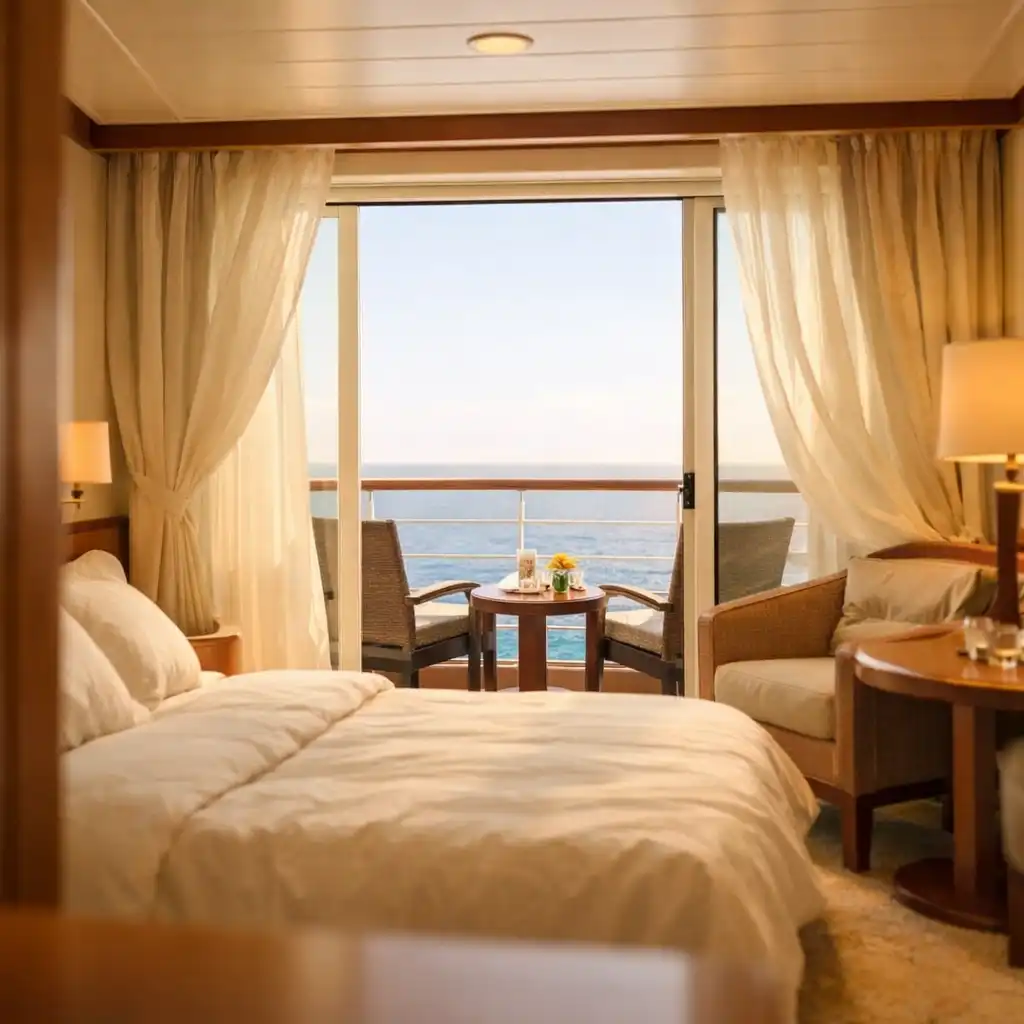
Balcony cabins add a private outdoor area, perfect for morning coffee, sunset views, and fresh sea air. They are the most popular category for a reason. Typically 180 to 220 square feet plus a 40 to 60 square foot balcony, these rooms give you a personal slice of the ocean. Balcony furniture usually includes two chairs and a small table.
Consider privacy before booking: some balconies are overlooked by higher decks or adjacent angled partitions. If uninterrupted views matter, study the deck plan and look for balconies that are not directly beneath a public overhang.
There is nothing quite like stepping onto your own balcony at sunrise, coffee in hand, with the sea stretching to the horizon.
Suites: Space and Perks
More Room to Unwind
Suites range from junior suites with extra seating to expansive multi-room accommodations with separate living areas, larger balconies, and premium amenities. Junior suites are around 250 to 300 square feet with a sitting area, while full suites start at 400 square feet and often include a separate bedroom and living room.
Typical suite perks may include priority boarding, butler service, exclusive lounge access, and enhanced dining options. These extras vary by cruise line, so the suite experience is about more than just square metres.
- Priority embarkation and disembarkation
- Access to a private lounge or sun deck
- Upgraded bath amenities and bedding
- Dedicated concierge or butler service
Deck Location and Motion
Finding Your Sea Legs
The ship's movement is felt most at the front and back, and on higher decks. Midship cabins on lower decks experience the least motion, making them the best choice for motion-sensitive travellers. Forward cabins may feel more movement and anchor noise, while aft cabins can experience engine vibration but often have great views.
Lower decks near the centre of the ship feel the least movement.
Noise and Neighbours
Quiet Corners of the Ship
Cabins near elevators, stairwells, or public venues can be noisy. Choosing a cabin between two passenger decks, with cabins above and below, reduces disturbance from music, deck chairs, and late-night foot traffic.
Avoid cabins directly under the pool deck or nightclub, and bring earplugs as a precaution. A little planning before you book can make the difference between a restful night and a noisy one.
First-Time Tips
A Few Notes from the Journal
A collection of practical tips gathered from experienced cruisers, presented as short field notes.
Book Early
Book early for the best cabin selection. Popular midship balcony cabins and family suites sell out first, especially on school-holiday sailings.
Guarantee Cabin
Consider a guarantee cabin for potential upgrades. You give up choosing your exact room, but the cruise line may assign a higher category at no extra cost.
Power Strip
Pack a power strip; cabins have limited outlets. A compact, cruise-approved strip keeps phones, cameras, and e-readers charged without hunting for sockets.
Packing Cubes
Use packing cubes to maximise storage. Cabin wardrobes are efficient but compact, and cubes keep shelves tidy and make unpacking quick.
A Cabin for Every Traveller
Finding Your Fit
The best cabin depends on your budget, travel style, and priorities. Inside cabins offer value, oceanviews provide light, balconies add outdoor space, and suites deliver luxury. Consider how much time you will spend in the cabin, think about motion sensitivity and noise tolerance, and use deck plans to visualise location before you commit.